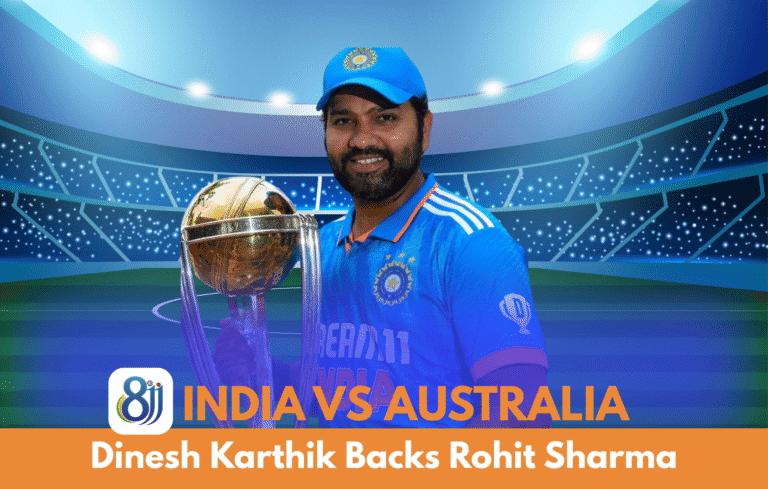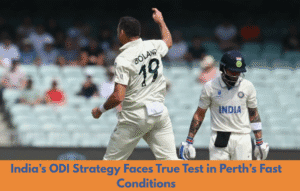
India’s ODI strategy of strengthening their batting lineup at the expense of attacking bowling options is facing a serious test in Australia’s pace-friendly conditions. Unlike their dominant showing at the Champions Trophy in Dubai earlier this year—where they went unbeaten despite losing every toss—Perth’s bouncy track has exposed the limits of their spin-heavy combination.
In Dubai, India relied on a single specialist pacer alongside Kuldeep Yadav and Varun Chakravarthy, both of whom thrived on dry, slow pitches. But in Australia, the bounce and seam movement have reduced the effectiveness of India’s spin-bowling allrounders, challenging both their batting and bowling balance.
The main question now is whether India can remain a wicket-taking threat in the middle overs of ODIs, a phase where they dominated during the Champions Trophy. The absence of Jasprit Bumrah, rested after the Test series against West Indies, has also weakened their death-bowling strength.
In the series opener at Perth, India lost their 16th consecutive toss and were inserted to bat in challenging early-summer conditions. The match offered little insight due to rain interruptions and two unlucky dismissals before breaks that impacted their DLS chances. Although India’s pacers generated movement, small errors in line and length proved costly as Travis Head and others capitalized.
Captain Shubman Gill’s selection choice—excluding Kuldeep Yadav for extra batting depth—left India with limited wicket-taking options in the middle overs. With Harshit Rana batting at No. 9, India fielded just three frontline fast bowlers and 20 overs of part-time spin, which may not work consistently in Australian conditions.
As the series moves to Adelaide and Sydney, India could be forced to play three specialist pacers, prioritizing balance over batting depth. Veterans Rohit Sharma and Virat Kohli, dismissed cheaply in their first ODIs in seven months, will be key to stabilizing India’s campaign as they adapt to tougher conditions.
The real challenge for India lies in finding the right balance between batting depth and bowling firepower — a puzzle they must solve before the next World Cup in 2027, to be held in South Africa, Zimbabwe, and Namibia.